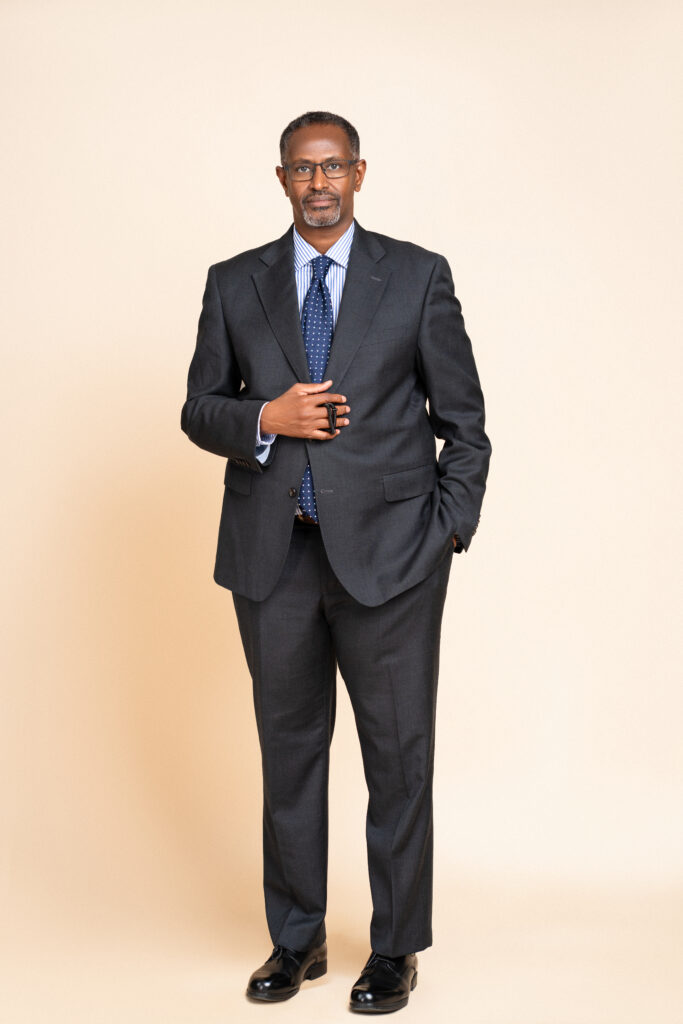
About Nuradin Dirie

About Nuradin Dirie

A Legacy of Leadership and Renewal

Nuradin Aden Dirie’s life is a continuum of Somali nation-building – from the independence generation to the global era.

Born in Hudur, his family helped found the Somali Youth League and contributed to shaping Somalia’s early democratic institutions. His father was a freedom fighter and MP in the last democratic parliament. His uncles built the financial and legislative foundations of the state.

A Life of Preparation

Every chapter of Nuradin’s life has prepared him for this moment – to guide Somalia’s transition from fragility to strength, from dependency to dignity.

His leadership is not transactional, but transformational.

He is not just running for office – he is calling for a renewal of purpose.

But Nuradin’s leadership was not inherited – it was earned.

Educated in Mogadishu, Lahore, and at University College London, Nuradin studied the intersection of environment, politics, and society – the blueprint for rebuilding fragile states.

His professional journey reflects three decades at the forefront of diplomacy, peacebuilding, and humanitarian leadership, including:


  • Senior figure in Somali statecraft, guiding presidential strategy and national reform.

  • UN leader in peacebuilding, shaping Somalia’s security and governance transition.

  • Regional peace architect at the European Institute of Peace.

  • National lead for the 2004 Tsunami response, directing one of Somalia’s largest humanitarian operations.

  • Founder of the Dirie Foundation, driving social and environmental justice

He has spoken truth to power in global forums, defended Somali sovereignty amid regional pressures, and built consensus where others deepened division.

“Nuradin doesn’t just talk about Somalia – he listens to it.” – Adan Dheere, Baidoa

“He balances intellect, humility, and Somali wisdom.” – Former UN Envoy

How We Work

Meet Our Team

It has survived not only five centuries, but also the leap into electronic typesetting, remaining essentially unchanged. It was popularised in the 1960s with the release